Instructor · Trevor Richtenburg
Taught by an operator, not a vendor.
I am not an AI company. I run a travel business in one of the harder places in the world to run one, and I have used these tools to do it every working week since April 2023.
- Instructor
- Trevor Richtenburg
- Course run by
- Trevor, directly — no company in between
- Trained as
- Mechanical engineer
- Practising
- Daily since April 2023
- Travel business
- adventure-access.com
- Based
- Delhi, India
- Teaching
- One to one only, three places
- Course status
- First cohort, January 2027
On this page
What people need is not a demonstration. It is five months of structured practice on their own material, with someone who will tell them when they are doing it wrong.
Why this course exists.
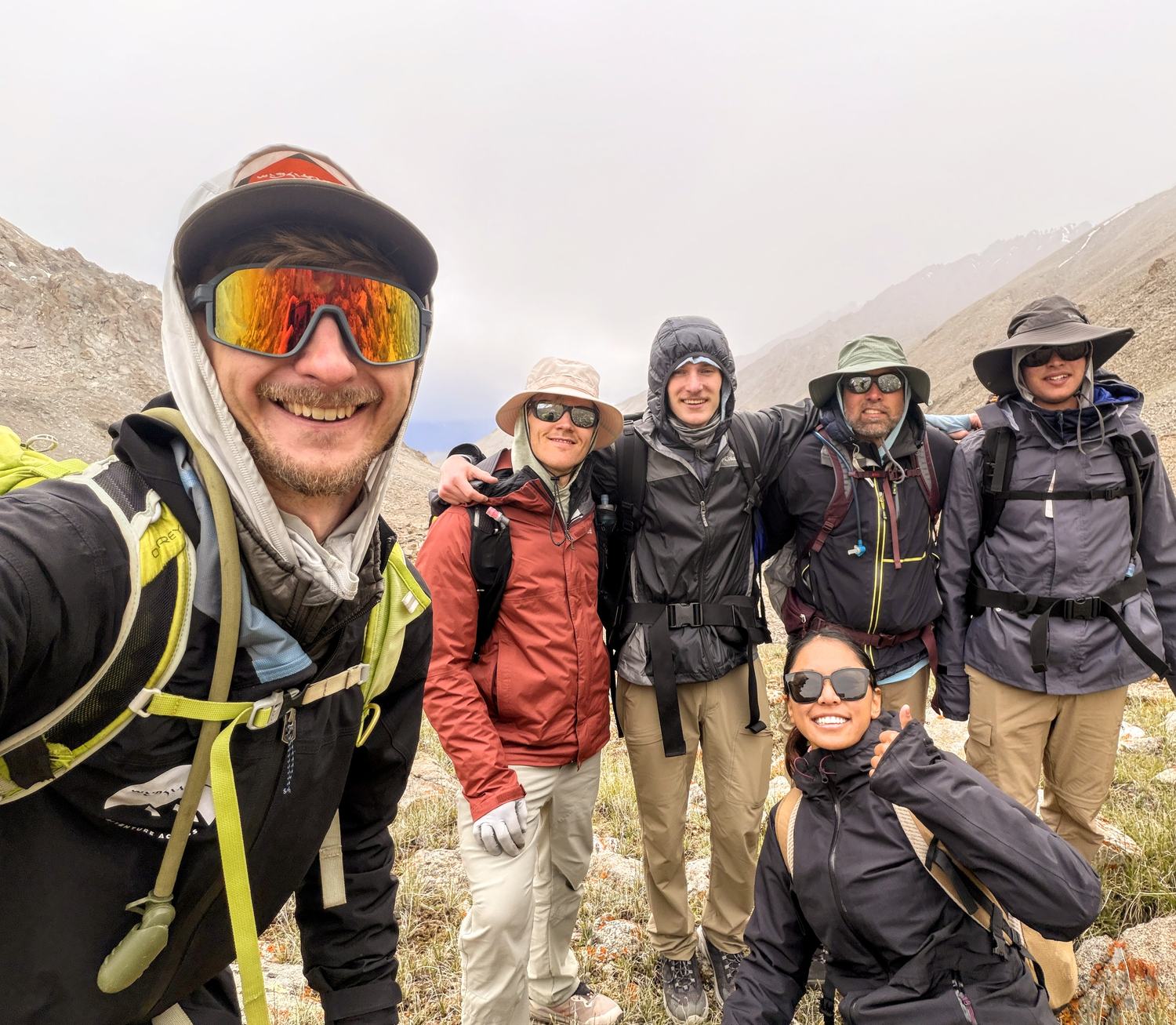
It started as an answer to the same question asked repeatedly. I run Adventure Access, an adventure travel operation working in Ladakh and Zanskar in the Indian Himalaya, and a rental gear business that supplies it. The work is a mix of things that do not obviously go together: itinerary design for mixed-nationality groups, air cargo into Leh, Indian regulatory filing, equipment inventories, and a large volume of client-facing documents that all have to be right.
Over the last three years I rebuilt most of how that gets done around two tools, and the difference was not marginal. Documents that used to take an afternoon take twenty minutes. Research I could not previously afford the hours for is now routine. I have built small tools for myself — itinerary generators, document producers, records handlers — that I could not have commissioned at any price that made sense for a business this size.
People started asking me to show them. I did it informally for a while and found that the informal version does not work. So I built a course.
One thing is worth stating plainly, because Unit 3 rests on it. I trained as a mechanical engineer, and that degree included programming coursework, principally Python. I have never worked as a software developer and do not claim to be one. But being able to read code and tell when it is wrong is the difference between directing this work and hoping it comes out right, and it is why the tool-building here is taught as specification and review rather than as something that happens if you ask nicely.
I should be straight about the limits of that. I am an experienced practitioner, not a researcher and not a data scientist. What I can teach is what I actually do every day, on real work, with real consequences when it goes wrong. Where the course reaches the edge of what I know, I say so.
Background
What I actually do.
I am an American, based in Delhi, running operations in the Indian Himalaya. Day to day that means:
- Itinerary and logistics design for expedition and trekking groups in Ladakh and Zanskar, including groups with mixed nationalities and the permit and border-crossing complications that come with them.
- Air cargo and equipment logistics into Leh, and a rental gear fleet with the supplier relationships, quality control and labelling that a fleet requires.
- Indian regulatory and corporate administration — GST filing, company documentation, the paperwork of operating a registered business in India as a foreign national.
- Client-facing document production at volume: itineraries, travel documents, invoices, records. This is where I first put AI to work and where I learned the most about what it gets wrong.
None of that is AI work. That is the point. The methods in this course were developed because I needed them to run a business, not because I set out to teach them, and they have been tested against the kind of consequence where a wrong date on a document means someone misses a flight into a valley with three flights a week.
- Operating
- Ladakh & Zanskar
- Tools taught
- Claude, NotebookLM, static hosting
- Language
- English
- Time zones
- Scheduled around yours
I work across a nine-and-a-half-hour offset from the US east coast routinely and it has never been the hard part.
The practice it comes from
What three years of this has actually produced.
A course taught from practice should say what the practice is, so here it is in the plainest form I can put it: what was built, roughly how much of it there is, and which part of the course each piece feeds. It is my own work and my own businesses' throughout. None of it is client material and none of it is reproduced here — the confidentiality commitments rule that out — so what follows is counts and capabilities rather than files.
- Practising
- Daily since April 2023
- Trained as
- Mechanical engineer, with programming coursework
- In regular use
- Claude, NotebookLM, ChatGPT, Gemini, Perplexity
- Trip sites built and deployed
- 18
- Receipts through the OCR pipeline
- 457 across 17 consecutive months
- Files under AI-assisted management
- 2,507 in 13 project areas
Building and shipping software
This is what Unit 3 is taught from. I am not a software developer. What I do is specify, direct, test and ship things I could not have written alone and could not have afforded to commission at a price that made sense for a business this size.
- Eighteen client trip sites, built as static web pages with their own photography and print styling, and deployed.
- A document-intake system. Guests upload passports, visas and signed waivers through the trip site and the files land in the right folder of my drive, through a small server-side function running against a cloud service account. I specified it, directed the build, wrote the setup runbook, and operate it.
- A financial back office. Receipts and payment confirmations read by OCR, renamed to one convention, filed by month and reconciled against bank statements into master workbooks — 457 receipts across seventeen consecutive months — plus chat exports parsed into consolidated tour records.
- Spreadsheet backends, scheduled scrapers and financial tools written as Google Apps Script, which is where the travel company's day-to-day numbers actually live.
- This site. Its pages are generated by a small set of Python modules from one structured curriculum file, and the Schedule Builder on the Tools page was written from scratch for it and tested against fifteen input cases.
- A Ladakhi dictionary app, built from a database recovered out of a discontinued Android app — and I wrote to the publishers asking permission before going any further, offering to delete the lot if they would rather. The technical half of that was the easy half.
Documents, at volume and with consequences
This is what Unit 2 is taught from. Most of it is unglamorous and all of it has to be right.
- Indian foreigner registration. Form C arrival and departure registrations and police checkpoint forms, generated by reading passports, visas, e-visas, entry stamps, tickets and insurance certificates out of photographs, scans and PDFs, and filling the official templates from what they contain.
- Client documents: itineraries, cost sheets, taxi fare estimates, guide checklists and packing lists, produced as web pages and as printable files.
- A full day of STEM teaching for a village school in Zangla, for eighteen or nineteen children between four and twelve: a leader guide, a worksheet, an introduction script and a language-pairing plan for a team in which only two of the adults spoke the children's first language. The rockets were not the hard part.
Research and synthesis
This is what Unit 1 is taught from — a grounded corpus and an open reasoning tool used together, which is the division of labour the unit spends six sessions on.
- Background research for investment and pharmaceutical consultancy work, assembled across NotebookLM, ChatGPT and Perplexity rather than inside any one of them.
- A dormant account traced and recovered. A trust account opened in the 1990s, followed through a fund's merger history to the institution holding it today, with a call script to go with it: the questions in the right order, and what to do when the first answer is no. The method is teachable. The file carries account identifiers and stays private.
- Audio explainers built with NotebookLM, on Indian history and on the Indian healthcare system, made from assembled sources to learn from and then shared. One is public: an episode on Humayun's Tomb, the Mughal garden tomb in Delhi. It is the quickest way to judge this kind of output, because you can listen to it instead of reading my description of it.
- Medical records made legible and portable. A set of hospital records held outside any institution: an MRI study converted from its raw diagnostic format into sixteen labelled sequence images that could be viewed and carried without the hospital's own software, and 127 documents — case sheets, ward notes, lab reports, discharge summaries, prescriptions, much of it handwritten — read by OCR into one searchable, dated record, under a convention that flagged every uncertain reading and every illegible passage rather than guessing at it. The transcript states on its own first page that it is a transcription aid and not a clinical document. That boundary is the entire point of the example: the tools made an existing record complete and portable so the people qualified to make decisions had it in front of them. They made no clinical judgement and were not asked to. Nothing from that work appears on this site in any form.
Design and brand production
- The mark at the top of this page is my own drawing, produced out into a full system: lockups in their light, dark and single-colour forms, icon and social exports, a stylesheet of design tokens and a written set of rules for using them.
- Logos and store graphics for the rental gear business, made with Canva alongside an image model.
- A written brief for putting the same logo problem to other AI tools — a long version for reasoning models, a short one for image generators, and the criteria for judging what came back. The difference between prompting and briefing is most of what Unit 1 teaches, and that document is what it looks like on a real problem.
Further afield
Two things that are not course outcomes and are not offered as any. They are here because the honest picture includes them, and because knowing where these tools stop being useful comes from having pushed them past it.
- Device repair. Diagnostics and firmware reloads on phones and other hardware, run with a model connected to the device through a laptop.
- Training and nutrition tracking against mountaineering goals — the same personal-systems method Unit 2 teaches, applied to something that is nobody's business but mine.
No client names, no screenshots, no file names, nothing out of anybody's file. Every folder of that work carries somebody's surname, and the privacy page promises client material is never reused, including anonymised. So the record above is counts and capabilities. That is the weaker form of evidence, and it is the only honest one.
If you are an employer, a funding scheme or a fellowship reviewer and a list is not enough, ask. Most of these systems are in daily use and I can show them working, live, on a call. I would rather answer a hard question before enrolment than have one asked afterwards.
What the customers said
The record above is mine. This one is not.
Everything on this page so far is my own account of my own work, which is the weakest kind of evidence there is. The travel business those methods were built to run has a customer review record I did not write and cannot edit: 21 reviews on Trustpilot, rated 4.5 out of 5 as of September 2026. Six of them are below, verbatim. I chose which six; I did not choose what they say.
Read them for one thing in particular. Nobody quoted here was asked about AI, and as far as I know none of them has any idea it was involved. What they keep naming — the planning, the packing lists, the paperwork, the itinerary rebuilt when the permits failed, the answer that came back before the trip — is the output of the systems this course teaches, arriving in front of somebody who had paid for it and would have said so if it had been wrong.
“the planning that went into every moment of our trip was unlike anything I have seen; from the meals to plan A, B, and C riding options to road stops for tea; this team is thinking several steps ahead at all times.”
“We had some issues outside of the control of A.A with permits, and they pivoted our itinerary very quickly making seamless changes to the itinerary as necessary.”
“Communication and packing lists were clear and easy to follow.”
“There was good communication and a helpful attitude. I always felt prepared for the day ahead.”
“It was the perfect combination of being prepared and organized, while still being extremely authentic and leaving room for our group to personalize the trip.”
“He was always available and responsive during tour preparation. Did address individual questions and concerns.”
Which parts of that are actually mine to claim
Being precise about this matters more to me than the testimonials do, so: the mountains are not my work, the guiding on the ground is shared with a team who have lived there all their lives, and the welcome in those homestays is a relationship built on foot over years. AI did not touch any of it and this course does not claim it.
What the tools did build is narrower and duller and it is the half these reviews keep noticing anyway: the itineraries and their B and C options, the cost sheets, the packing lists, the trip site each group gets, the arrival logistics, the foreigner registration and checkpoint paperwork, and the research behind a route nobody in the group has walked before. That is Units 1 to 3 of this course, applied to a business where a wrong date means a missed flight into a valley with three flights a week.
And one thing these reviews cannot tell you at all: whether I can teach any of it to you. Nobody has completed the Practicum, because the first cohort starts in January 2027. For that question you have the full curriculum, the tool with its build written up session by session, and three sessions that are not invoiced.
The review record
4.5
out of 5, across 21 reviews, as of September 2026.
- Platform
- Trustpilot
- Subject
- Adventure Access, the travel business
- Reviews of the Practicum
- None — it has not run
- Period covered
- 2024 – 2026
- Editable by me
- No
Quoted here in the reviewers' own words and attributed as Trustpilot displays them. Nothing has been shortened in a way that changes what it says.
How the course is run
One instructor, and nothing in between.
The Applied AI Practicum is taught and run directly by me. There is no company between us, no sales team, no account manager and nobody else in a session. You deal with the person who teaches the hours, and the invoice comes from the same person.
The travel businesses are separate. Adventure Access and the gear operation are where these methods came from and where they are still used daily — that is the reason the course exists, and it is why the examples are real. But the Practicum is not a travel product, is not sold through them, and is not billed through them.
It is also the first time it has been taught. The cohort beginning in January 2027 is the pilot: the curriculum is written, the syllabus is published, the materials are built, and nobody has yet been through any of it. That is the honest position, and it is the reason the first three sessions are unbilled. The risk of an untested course belongs with the person selling it.
Practically, that means three places a cohort and no more. The curriculum is rebuilt around each participant's work and the tool-building in Unit 3 takes real time to support. A fourth place would mean doing all four worse.
If someone else is paying
Employers and fellowship schemes generally ask for four documents. All four are provided on request, at no extra cost.
- Itemised invoice
- Yes
- Course description with hours
- Yes
- Attendance record
- Yes
- Completion certificate
- Yes
Scope
What I do not teach.
Worth reading before you enrol, because if what you want is on this list you should not buy this course.
How AI works
You will learn enough about model behaviour to know where it fails and why. You will not get machine-learning theory, model architecture, or anything you could take into a technical interview.
Programming
Unit 3 teaches specification, direction, testing and hosting. You will read code and understand it. You will not come out able to write an application from scratch, and anyone who tells you five months of one hour a week will do that is selling something.
Enterprise deployment
This is a course for an individual practitioner. Rolling AI out across an organisation is a different problem with different failure modes, and I have not done it.
Start with a conversation.
Thirty minutes, no cost, about your work rather than about the course. If the fit is wrong I will say so.
Or email directly: trevor@adventure-access.com